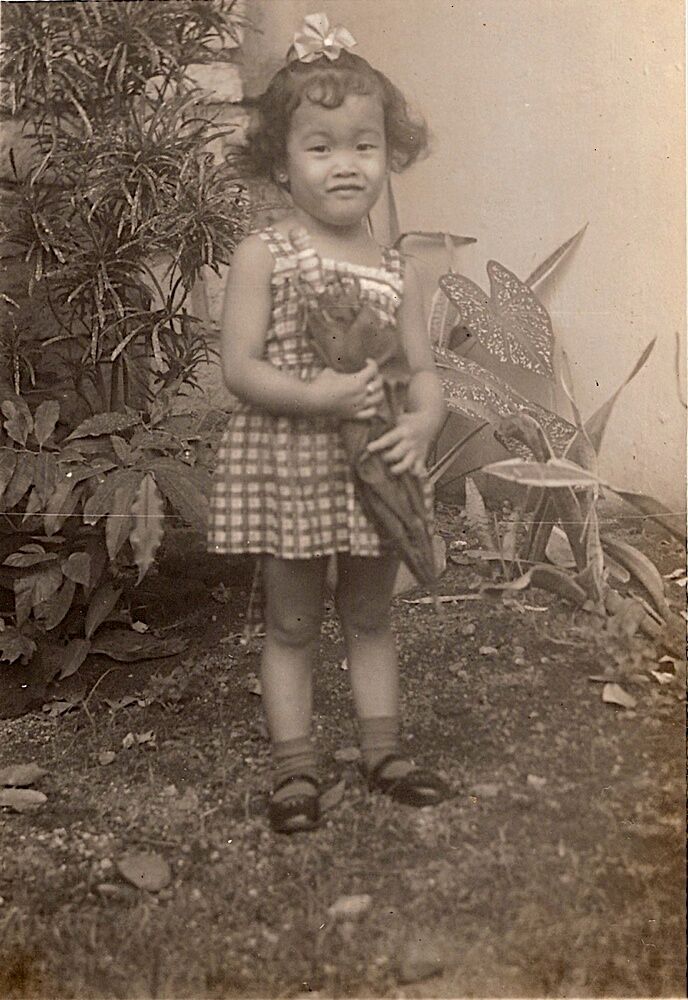
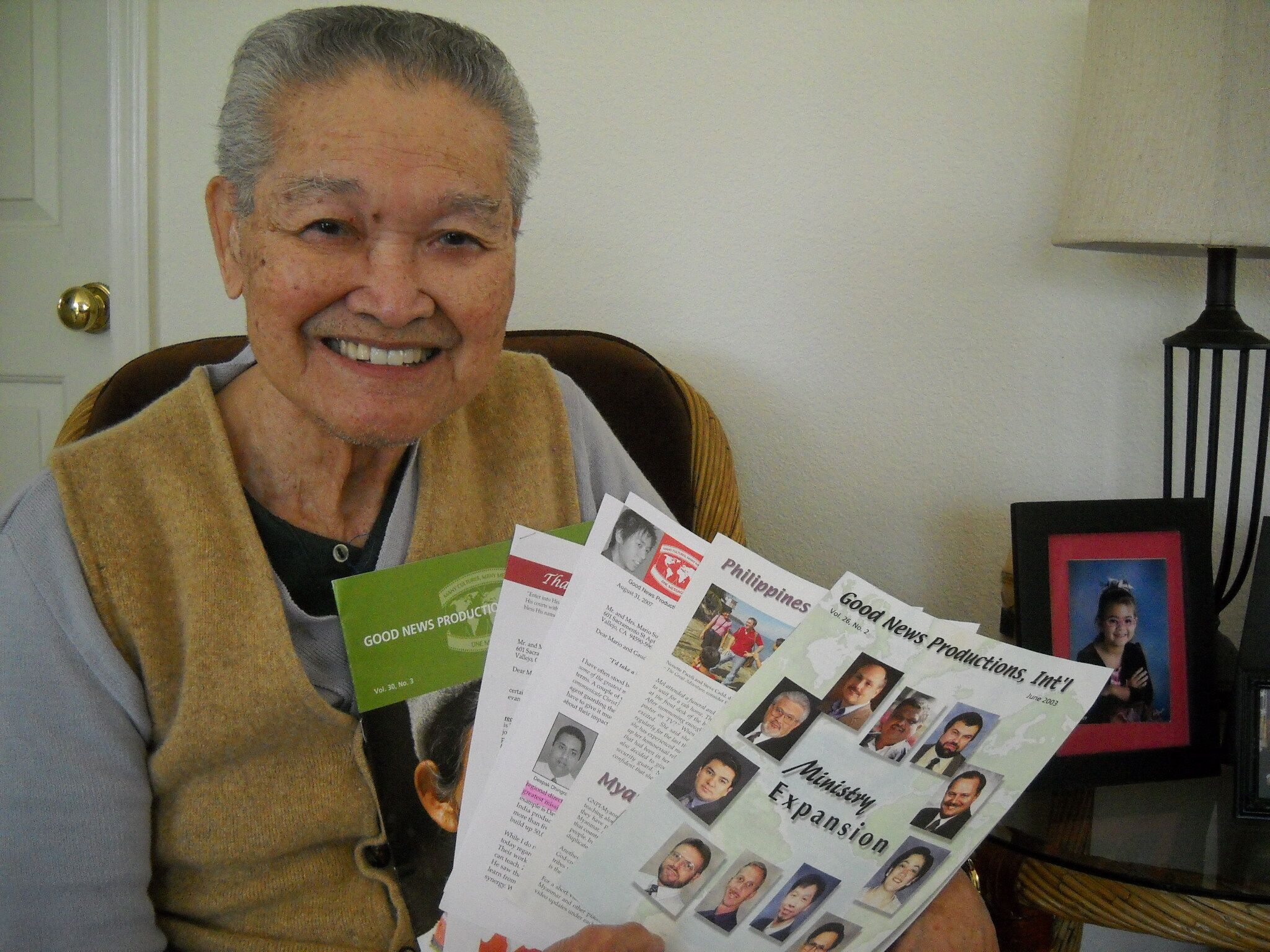
Happy Birthday Lolo Mario!
This is an unedited story from my journal on 3/16/11 describing a conversation we had at dinner that night. I’ve only shared this with Abby and it’s pasted below in its original form. I cherished all the time Lolo Mario and I had together even when there were very little words exchanged. We all miss you Lolo very much…
*****
It was just Lolo and I at dinner tonight. Dad was at Bible study and mom was feeling sick. The TV was off. Lolo mentioned how the Heat was losing. I asked if there was still a chance they would make the playoffs.
“Yes, they will make the playoffs. They are just inconsistent”, he said.
We quickly changed topics to the events happening in Japan. About Christina (my brother Jacob’s wife) and her entire immediate family still in Fukushima, and how her grandfather, about the same age as Lolo, had buried water jugs underground for times like this. Her grandfather had lived a full life, through war and hard times and knew the value of preparedness, even if it meant chuckles of disbelief from his family, much younger than he.
My dad talked to Christina on the phone the other day. She mentioned to him that her family was still in the area, boiling her grandfather’s water using their backup generator. The last few days I’ve been able to read the never-ending stream of news, photos, and eyewitness video from the safety of my work computer screen, which more than likely is also of Japanese ancestry. It’s all surreal from where we are. We are an ocean away, but having family and new family (whom I’ve never met before) makes every word and photo so, so heavy. I am overwhelmed and my eyes glaze over to almost-tears the way Western men do, as I recount the story to any coworkers willing to part with any lightness and invulnerability they were feeling before coming into my swivel chair blast radius. This is really happening.
I think about the “Fukushima 50” from the PBS article I had been reading. Shifts of 50 men and women (anonymous, according to our news) in HAZMAT suits and miner helmets risking their lives to spelunk into a radioactive black hole of questions they might not have answers to. I tweeted a few days earlier that no amount of Jack Bauer or Tom Clancy could prepare anyone for the calamity that befell Japan’s nuclear power plants. Failsafe after failsafe, well, failed and is now unsafe. Plan C was the on-paper last line of defense and they were now on plan F. What happens when the best option is to send the best options into the eye of the storm to die?
I think about the beaches of Normandy and the waves of life lost to advance a front. A line of thought. A way of life. These brave engineers, the brightest in the country, didn’t have the time the writers of 24 had. They didn’t have the benefit of objectivity or writers rooms. They were needed, and there were (and are, still) costly decisions to be made. The room for error here isn’t Neilsen ratings, but Natori children and grandchildren and great-grandchildren. At times like this I think about fate and free will, and how it always, always, comes down to individual choice.
What will you do? What do you truly value? Is your family growing up without a father more important than a 1,000 families without fathers? 10,000? 20,000?
These are the tough choices we can trace all the way back to the Garden, the ones in the white space between Bible verses, the unsung hooks of childrens songs like “When I get to heaven gonna walk with Jesus…”. We won’t know the answers until we see him face to face. But can we catch a glimpse in this moment? This infinite speck of dust in front of all of mankind? Everything leads us to where we are. Just a few days ago these same people were punching time, much like I am as I read about them. Sitting in swivel chairs and watching widgets and data and doohickeys and dreams deferred. You never know when your number will be called.
Lolo says he can’t understand why the nuclear plants are so close to each other. His diet consists of cable news, baggoong, and too-late printed newspapers. I tell him I found some very helpful explanations on the internet of what happened in Fukushima, along with video and diagrams of the nuclear process. He seems disinterested in the specifics, and I try to lead him into the time machine that only appears when it’s just the two of us around.
“Lolo, when you were an engineer, did you ever study nuclear?”
“No. They didn’t have that before.”
It’s true. He was born in 1921 and though he lived through multiple wars and even an atomic one, nuclear was hindsight curriculum. I watched his eyes and the time machine appear.
“I don’t think we had that until 1944”, he said. “Not until World War II, in order to accelerate the end of the war.”
My time travel experiment worked. I kept it running with more questions.
“Or maybe it was 1945…”
“Lolo, how old were you then?”
Armed Japanese sentries roamed the streets of Manila in the late 1930’s and 1940’s, and I had heard little to none of this time in Lolo Mario’s life. The Philippines, as clearly stated in the articles of The Pacific, Flags of Our Fathers, and Band of Brothers, was a key country to tip the scales of the war at that time. The Japanese were in charge during this particular time-travel session. Lolo said his family was very poor, and asking him about engineering brought him back to his time in college. He was the only one in his family to go to college, and I made it a point to ask him if his parents encouraged or discouraged him to go to school.
“They did not discourage me. We were very poor”, he said.
“Well, that’s good” I blurted out, in my privileged, Western accent.
“They did not encourage me either. We were very poor”.
I don’t remember seeing any pictures of Lolo Mario’s parents growing up, but I saw their faces then. A greatest-hits of parental wisdom and circumstance in two sentences. Lolo was an outlier. He mentioned that his eldest sister might have graduated high school. The next eldest, his brother Ilio (sp?) only finished elementary school. I thought about this for a good 10 seconds as Lolo Mario took a break with spoonfuls of pancit. The next eldest was his sister Amparing.
“You also had a sister named Amparing!” This was news to me.
“Weeell, not quite”. Spoonful of time-machine fuel.
His mom had three miscarriages before his sister Amparing, either lost during pregnancy or stillborn. They were all named Amparo.
Time-machine forward, to a time travel session a few weeks ago on our way back from church. Lolo and I discussed what happens when we die, when everyone dies, and we theorize on the specs of babies and children when they die. Are they still babies in heaven? We both knew that we are given new bodies in heaven, so we went with that. Cue evidence of Jesus post-transfiguration appearing to his friends and them not recognizing him right away, even walking and talking with him for a while before realizing it was Jesus. I had never thought that thought until that time-travel session on our way back from church.
Time-machine back to story present. All the babies named Amparo had died, and Lolo Mario’s mom, being superstitious and not wanting to jinx the fourth Amparo, named her Maximillia (sp?). Lolo’s dad was absolutely un-superstitious, but ceded baby naming rights to his wife. Again, another parenting greatest-hits story in a sentence. Maximilia was born and to compromise and honor those before her, gave her the nickname Amparing, which she would go by her whole life. Amparing maybe got through high school, Lolo Mario said.
His next eldest brother was Jose, a name I had never heard of my entire life before tonight. Jose was important to the war story, to the Japan story, to the college story. At the height of the Japanese occupation in the Philippines, Jose vanished. Lolo Mario said he was in his early 20’s, since at that time was when Lolo started his first year of college. He said Jose would wait by the door for his brothers and sisters to come home because people were being sent to the work camps, never to see their family again. Jose was worried. Always worried. One day he never came home, and that’s what they suspect happened to him. Lolo’s dad even put up Missing, Jose Sulit signs on lampposts with a 50 peso reward. He was never found.
Lolo Mario was next in the birth order, and then he had another brother after him, but that brother passed away at 2 years old, when Lolo was 5. I cannot imagine how I did not know of all the loss my Lolo has experienced, even before his 21st birthday. Us Americans are too sensitive, I thought. I remember the times growing up that my mom and Tita Nini talk about their Kuya Niel, who died from falling down some stairs when he was in college. I thought that was the saddest part of my family story.
Lolo decided he wanted to go to college, determined not to time-travel to where his kuyas, ates, and parents resided. He started working at a gas station pumping gas for tips, for locals and the occasional American, who the boys would race to get to, and polish glass and spit-shine chrome like their life depended on it. It did. Mine did. He would save his earnings and after 2 years enroll in college and only then did he tell his parents he was taking college classes.
“We were very poor”.
I remember a sermon Brother Nard Pel gave at a CCMP function. His heavy accent and fiery delivery made it to this time-travel session. “Do not be a burrrrrddennn”. Maybe it was Lolo Mario who instilled this into Brother Pel, or maybe it was instilled in every Pilipino before crossing the Pacific.
I went back to Japan, where I told Lolo Mario that Christina’s family would likely have to evacuate because of the increasing radiation risk, and them being within the 40 mile radius to the plants. Their way of living was destroyed.
“Lolo, did you ever lose your house during the war?”
I didn’t expect to get such an interesting story extension, because I knew at some point my Lolo and my mom and family became middle class and well-off by Philippine standards.
“Our house burnt down during the war”
“How?”
“We do not know. The entire neighborhood burned.”
“Where did you go?”
They had family in another part of Manila that they moved in with, but I didn’t hear for how long.
“I was so sad,” I would be too…
“…that my picture of Gone With the Wind best actress Olivia de Havilland was gone. It was autographed.”
Another 10 seconds to process, pancit.
All this tragedy his entire life, and through the ashes and smokey memories Lolo remembers that he was once a young man, with a crush on an Academy Award winning actress (flash forward, Natalie Portman) that he wrote to and got an autographed photo from and probably raised his street cred with his friends over 10,000 millisieverts. I can understand the agony, as a young man, staring at a fire, remembering over pancit. [Fun fact: Olivia de Havilland was born in Tokyo, Japan.]
“Did you ever go back to your old neighborhood?”
“Oh yes. Afterwards my oldest brother and I, because he was big and very strong, gathered all the iron and aluminum and lumber around our old neighborhood and built a new house.”
That’s it. Just another day in the Philippines BUILDING YOUR OWN HOUSE. Another intermission, pancit, rice, spoonful of shrimp. This house was where they lived until their ends, I think.
“Did they see your graduation Lolo?”
“Oh yes. I already had my first son, your Tito Robie, while I was finishing my degree.”
This made me smile in a Lion King Simba ending circle of life kind of way. In the span of a few minutes, in a way only an 89 year-old retired engineering professor and lifelong Christian teacher that outlived his parents, all of his siblings, a son taken early, a home, a wife, and an autographed Olivia de Havilland photo could, he taught his grandson that nuclear family will forever be more important that nuclear fission. Between grey eyes and spoonfuls of pancit he made it clear that human spirit can overcome death, war, poverty, or natural disaster. That hope, and faith, and love of God and family transcend time and space and ocean and language. That the Japanese reaction to recent events–the non-looting, the entire country acting in concert, civil, honorable, and respectful–was not a foreign concept to him, and neither was forgiveness. Not once did he speak the slightest ill towards Japan for the events in the Philippines that shaped his youth. Not once. I am overwhelmed as my eyes glaze over to real, full-on tears, as I write this. A proud grandson, schooled in the art of time travel.
*****
– Abraham Isaac “ai” Cajudo